Table of Contents
Section A — Structure of Matter
Part I — Toroidal Electromagnetic Structure
Part II — The Electron as an Electromagnetic Supertorus
Part III — Electromagnetic Origin of Mass and Gravity
Section B — Structure of Light
Part IV — Physical Structure of the Electromagnetic Wave
Part V — Stability, Coupling, and Dimensions of Electromagnetic Waves
Part VI — Electromagnetic Interaction in the Photoelectric Effect
Section C — Interaction between matter and light
Part VII — Preservation and Reconstruction of Wave Structure
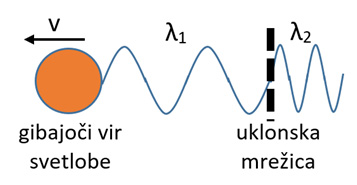
Part VIII — Differential Measurement of the Propagation Velocity of Astronomical Light
Part IX — Physical State of the Solar Photosphere from Spectral Measurements