The new research direction
The speed of light coming from space seems so unequivocal that we do not pay attention to its confirmation, even though it has not yet been measured.
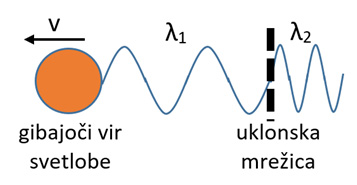
Measuring the speed of light from space is possible and it will be measured. How? We direct the light into the diffraction grating. Behind the grating the measured speed of light is equal to the constant c.
With a Fabry–Pérot interferometer, we can measure the wavelength of light in front of and behind the grating. If the two wavelengths are the same, this is proof that light from space comes at the speed of c.
Measuring these two wavelengths, however, brings the unwanted surprise. The diffraction grating affects light in a way that has not yet been explained. When light arrives from a moving light source, the grating changes the wavelength of the light. In front of the grating, the light has a different wavelength than behind the grating.
Measuring the speed of light behind the diffraction grating and measuring the wavelength before and behind the grating makes it possible to measure the speed of light from space.
Interestingly, the speed of light from space has not yet been measured. The measurement method is known and described in the articles: DARK MATTER and PEDAGOŠKI POGLED NA HITROSTI SVETLOBE Why does physics avoid this measurement? We may hesitate because the measurement can fundamentally change our view on the universe.
This measurement may explain the existence of dark matter. So far, actual dark matter research has not yielded noticeable results. This may mean that we are researching in the wrong direction. If we research in the wrong direction, we will not get the result despite great efforts.